Hide

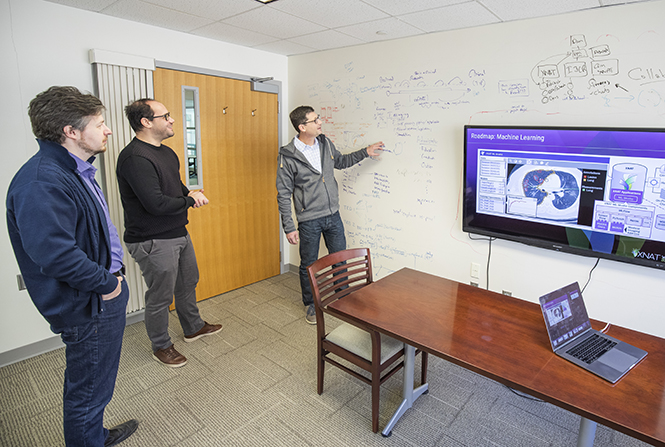
XNAT

XNAT was originally developed as an “extensible neuroimaging archive toolkit,” and has evolved to become a powerhouse open-source platform for … [More]


MORE ABOUT THIS PROJECT »

Hide

Human Connectome Project

In August 2010, the NIH awarded $30 million dollars to a consortium of institutions led by Washington University in Saint … [More]


MORE ABOUT THIS PROJECT »

Hide

Data Sharing

NRG participates in multiple data-sharing projects, whose goals are to provide anonymized data sets that will be valuable to the … [More]


MORE ABOUT THIS PROJECT »

Hide

NIAC

The Neuroimaging Informatics and Analysis Center (NIAC) provides a variety of services to Washington University’s neuroscience community, including data management, … [More]


MORE ABOUT THIS PROJECT »

Hide

CNDA

The Central Neuroimaging Data Archive, established in 2004, is the NRG’s flagship installation of XNAT, and supports multiple active research … [More]


MORE ABOUT THIS PROJECT »

Hide

CONDR

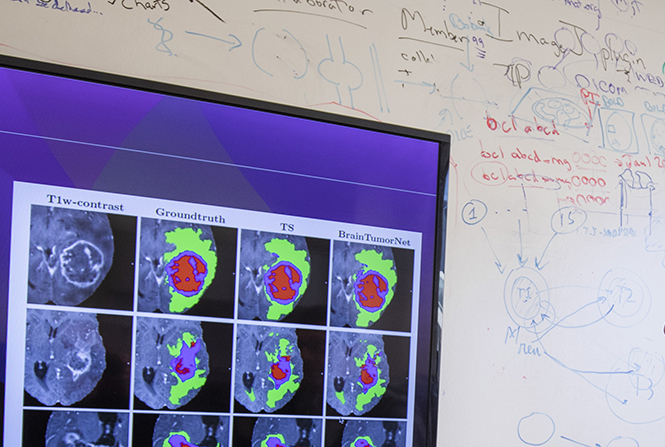
The Comprehensive Neuro-Oncology Data Repository (or “CONDR”) is a project to develop advanced imaging biomarkers, and an informatics platform to … [More]


MORE ABOUT THIS PROJECT »

Hide

ICTS Human Imaging Core

The Institute for Clinical and Translational Sciences (ICTS) at Washington University brings together researchers from a wide array of disciplines … [More]


MORE ABOUT THIS PROJECT »

Hide

More Projects

Aside from our large funded projects, NRG developers are always busy working on many smaller projects, enhancements, and activities. Some … [More]


MORE ABOUT THIS PROJECT »

Neuroinformatics Research Group
projects software jobs news events contact us about

WHO WE ARE

The Neuroinformatics Research Group at the Washington University School of Medicine, directed by Daniel Marcus, is a cross-disciplinary science and engineering lab. Our work in the NRG is to develop technologies that support neuroimaging and imaging informatics research that helps us better understand the living brain. Our software is open source and used around the world in the global effort to study and treat Alzheimer’s disease, schizophrenia, depression, brain cancer, autism, stroke, and a host of other neurological diseases.

Learn more about us: explore our projects, our software, and more.

pane-image-HOME

EVENTS


2012 XNAT Workshop

Date: Monday, June 25, 2012

The 2012 XNAT Workshop will be held in St. Louis, MO, on the Washington University School of Medicine campus June … [More]

...More Events

NEWS


Dates Set For XNAT 2012 Workshop

November 14, 2011

The NRG will be hosting an XNAT Workshop the week of June 25, 2012 in St. Louis.  We’re still working … [More]

New article published in Frontiers in Neuroinformatics

June 27, 2011

Frontiers in Neuroinformatics just announced the publication of a new article, written by Dan Marcus and Tim Olsen of the … [More]

DICOM Browser desktop installers now available (Updated)

June 8, 2011

Installing the latest version of DICOM Browser (1.5.0b4) locally on your desktop is now a shockingly easy process, thanks to … [More]

CNDA New User Open House on June 15th

May 27, 2011

The CNDA Help Desk Team would like to announce the first CNDA New User Open House sponsored by the Neuroimaging … [More]

...More News

JOBS


Updated: UI / Interaction Design (IxD) position available

We are seeking a front-end web developer who is both detail-oriented and passionate about bringing a great user experience to the web. We are embarking on a complete rewrite of...[More]

Programmer Analyst (XNAT)

Engineer image processing streams to assist in analysis of neuroimaging data, integrating existing methods and developing new methods as needed.

Apply for this job: searc...[More]

Postdoctoral Fellow

As part of an established multi-center NIH-funded neuro-oncology clinical research program, develop and validate MRI and PET imaging markers for malignant brain tumors.

...[More]

...More Job Information

Dashboard
Site Map | Privacy | © 2010-11 Neuroinformatics Research Group | Report a bug
The NRG site Network: NRG| XNAT.org| Oasis Brains| Human Connectome Project